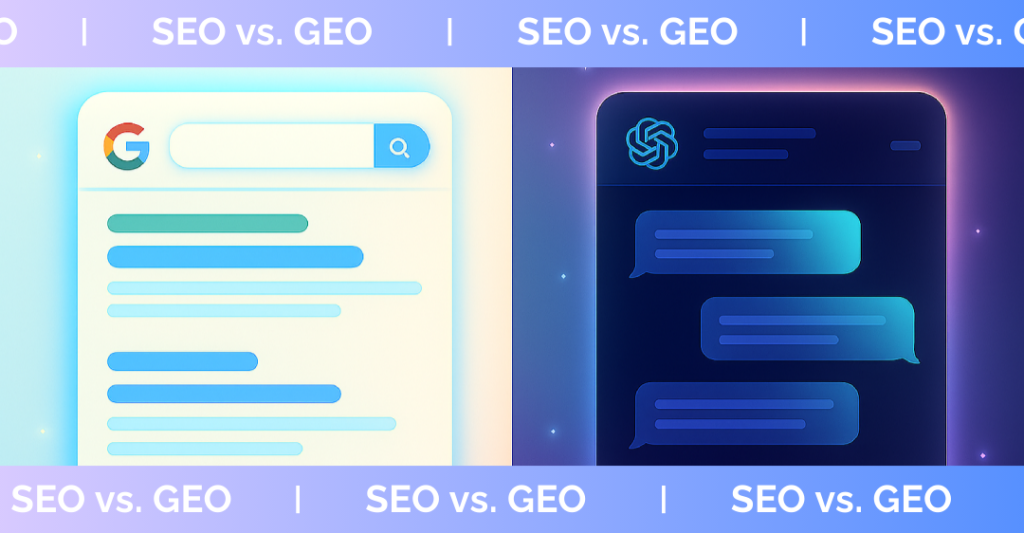
If you thought search marketing was complicated before, welcome to 2025—where SEO now has a futuristic cousin: GEO (Generative Engine Optimization).
Many marketers are still scratching their heads wondering, “SEO vs GEO… is this a turf war? A sibling rivalry? Or just two sides of the same visibility coin?”
Spoiler alert: It’s not about choosing one over the other. It’s about knowing how these strategies overlap, where they differ, and how to use both to stay visible in a world where search is powered not only by Google but also by AI tools like ChatGPT, Claude, and Google’s AI Mode.
And don’t worry—we’ll break this down without putting you to sleep. (Because honestly, SEO and GEO are exciting. At least… for marketers. For everyone else, maybe not so much. 😉)
Table of Contents
- SEO and GEO in a Nutshell
- Key Differences Between SEO and GEO
- Is GEO Replacing SEO?
- How to Optimize for Both SEO and GEO
- Frequently Asked Questions
- Conclusion
SEO and GEO in a Nutshell
Think of SEO as the wise older sibling—it’s been around for decades, helping websites climb to the top of Google. SEO is all about optimizing your site with keywords, backlinks, and performance tweaks so your audience clicks through to your content.
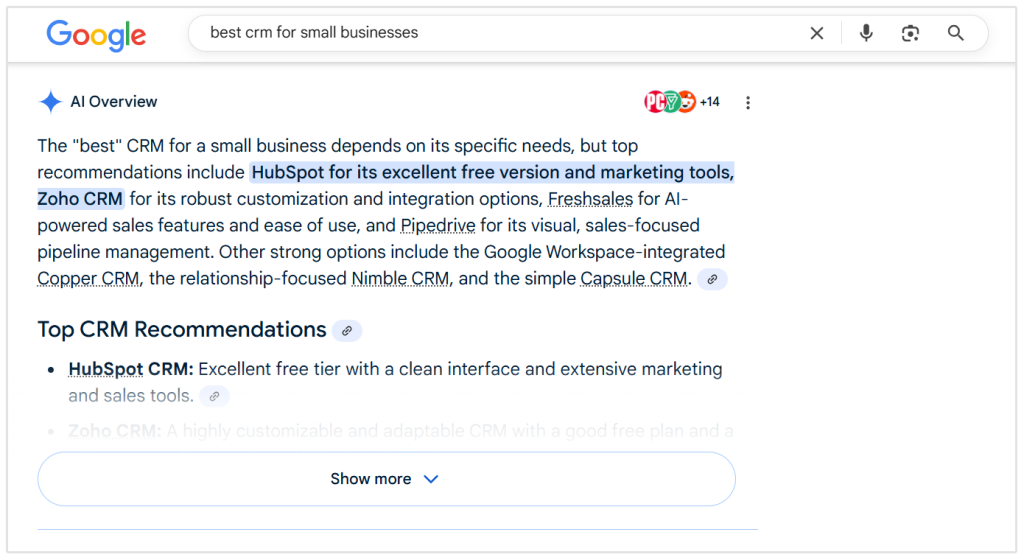
GEO, on the other hand, is the cool younger sibling who grew up with AI. Instead of fighting for clicks, Generative Engine Optimization focuses on making your content AI-friendly so that ChatGPT, Claude, and Google’s AI features actually cite you in their answers.
In other words:
- SEO = Website visits.
- GEO = AI mentions.
Both strategies are essential, and like PB&J, they’re better together.
Key Differences Between SEO and GEO
Here’s the breakdown (no dance battle required):
- SEO tracks rankings, traffic, and click-through rates (CTR).
- GEO tracks AI citations and your share of voice in generative responses.
- SEO emphasizes keywords, backlinks, and page performance.
- GEO emphasizes structured, scannable content and credible sources.
So while SEO makes sure people find your site, GEO ensures you’re not invisible when AI summarizes the internet for users.
Is GEO Replacing SEO?
Short answer: nope. Long answer: absolutely not.
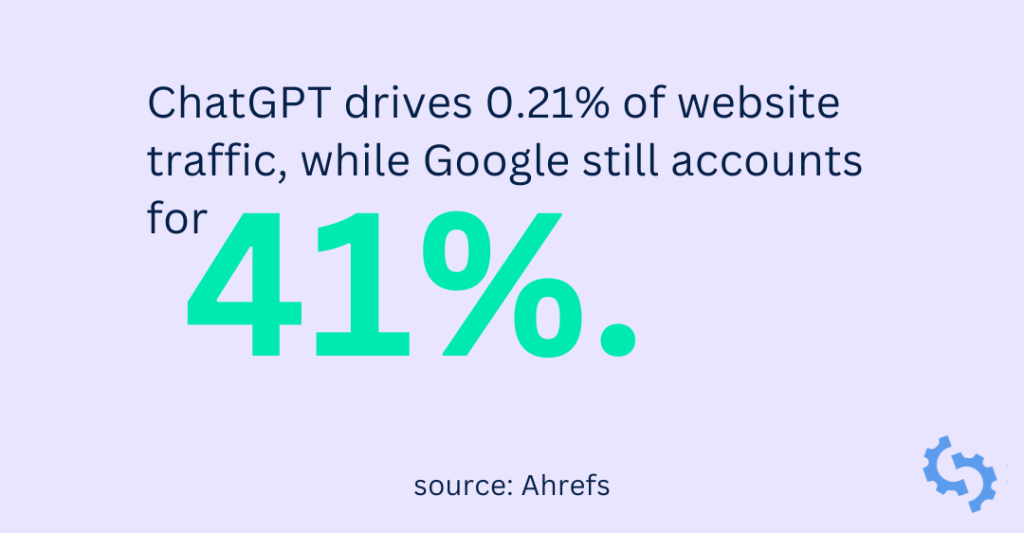
Data shows AI search traffic is rising but still tiny compared to traditional search engines. For example:
- OneLittleWeb found that from April 2024 to March 2025, chatbot traffic was only 2.96% of total search visits.
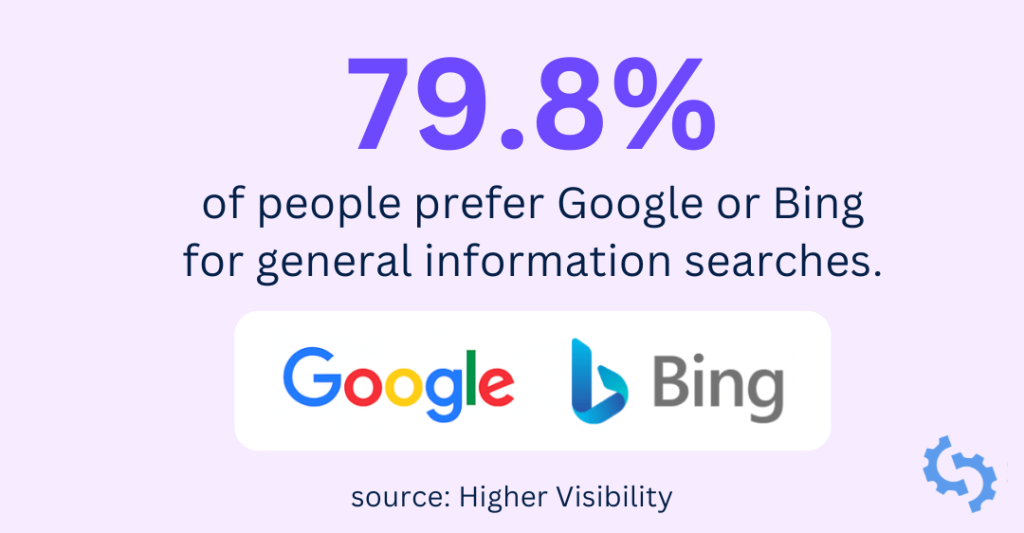
- Higher Visibility reported that 79.8% of people still prefer Google or Bing for general info searches.
Translation? SEO still runs the show. But GEO is the up-and-comer you don’t want to ignore.
Think of it this way: you wouldn’t only advertise on billboards when social media exists. So why would you only optimize for Google when AI platforms are shaping how people consume information?
How to Optimize for Both SEO and GEO
Luckily, optimizing for both doesn’t require sacrificing your sanity. Here’s a cheat sheet:
- Audit your top content. Is it structured, clear, and scannable? A few tweaks can make it AI-ready.
- Lead with the answer. Put key takeaways upfront—both humans and AI love instant clarity.
- Use facts and expert quotes. Stats and credible sources make AI more likely to cite you.
- Keep SEO fundamentals strong. Keywords, backlinks, and fast loading speeds aren’t going anywhere.
Remember: a solid SEO foundation boosts your GEO performance.
Frequently Asked Questions
Q1: Is GEO just another buzzword?
Not really. While it may sound trendy, GEO has real implications for how brands show up in AI-generated responses.
Q2: Do I need to hire a separate agency for GEO?
Not necessarily. A good SEO strategy updated with AI-friendly practices usually covers both.
Q3: Can GEO drive traffic to my site?
Yes, indirectly. While AI citations don’t always link back, they increase brand visibility and trust—leading users to search for you directly.
Q4: Which should I prioritize—SEO or GEO?
Start with SEO as your foundation, then layer on GEO tactics. Think of GEO as the “next step” rather than a replacement.
The SEO vs GEO conversation isn’t about choosing sides—it’s about creating a tag-team strategy that keeps your brand relevant everywhere people search.
SEO will always matter because traditional search engines still dominate. But GEO is quickly becoming the must-have strategy for visibility in AI-generated answers.
So, the next time someone asks you “SEO vs GEO?” you can confidently say: “Why not both?” After all, peanut butter without jelly is just… sad.
Ready to optimize for both? Start by auditing your current SEO strategy and sprinkle in GEO best practices so you can future-proof your visibility in both Google and AI platforms.