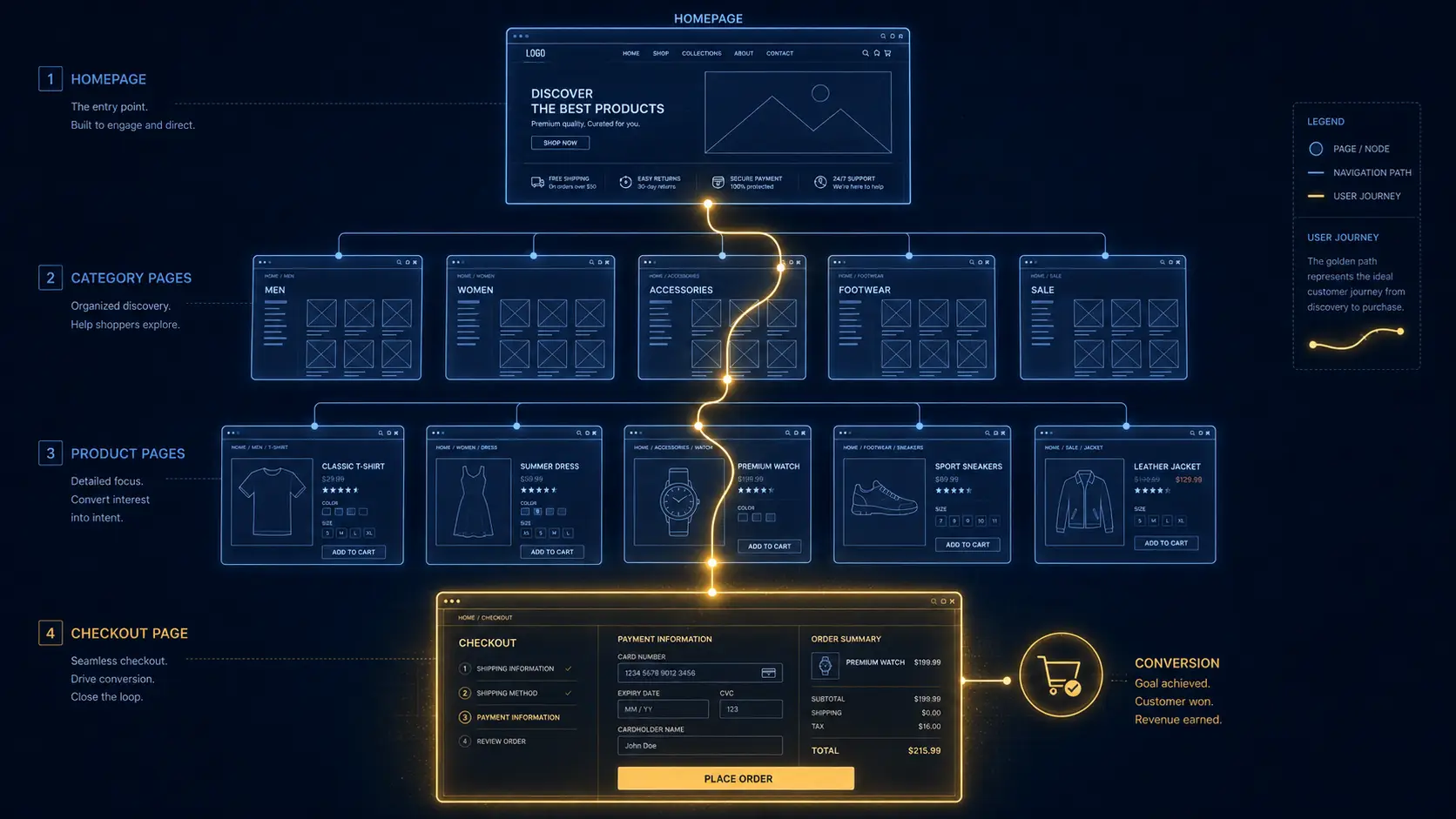
A well-planned website redesign consistently delivers measurable website redesign ROI small business owners can track. Benefits include lower bounce rates, more leads, higher search rankings, and stronger conversions. The key is redesigning strategically, not just cosmetically, and tracking the right metrics before and after launch.
Why Website Redesign ROI Matters for Small Businesses
Your website is working (or failing) around the clock. In today’s digital landscape, your website isn’t just a digital brochure, it’s your 24/7 sales engine. If it looks outdated, is hard to navigate, or doesn’t reflect your current offerings, you’re likely losing potential leads constantly.
The financial upside of getting this right is significant. SMBs with modern websites report 15–50% revenue increases. Meanwhile, over 70% of small businesses report increased revenue after launching a site, and those with optimized web experiences generate up to 2x more leads.
The businesses that see the biggest ROI approach redesigns strategically. They audit their current performance, identify specific problems, and build solutions that directly address those issues.
The Real Cost of Not Redesigning
Before calculating what you gain, consider what you’re currently losing. A tired, neglected website actively drains revenue. An outdated site sends the wrong message about your quality. Google favors fast, secure, and mobile-optimized sites, so older sites rank poorly. Outdated navigation, unclear CTAs, or clunky booking flows mean fewer conversions.
75% of people believe that a website’s credibility is based on design, and a site focusing on superior user experience can have a visit-to-lead conversion rate more than 400% higher than a poorly designed site.
The trigger for most redesign projects? Poor performance. Most web designers 80.8% say poor sales conversions are the main reason they redesign a website.
Key Website Redesign Benefits You Can Measure
1. Bounce Rate Improvement After Redesign
Bounce rate is one of the clearest signals of how well your site serves visitors. When you prevent bounces and get visitors engaged with the content, the chance of having them convert whether that means calling, signing up, or buying is dramatically higher.
Real-world results back this up. One client saw their bounce rate drop from 58% to 28% after a complete website redesign, a 30% reduction that made a significant difference across all performance metrics. Similarly, when a local therapist’s WordPress site was redesigned to simplify competing CTAs, the bounce rate dropped from 78% to 52% on the homepage alone.
The fixes that drive bounce rate improvement after redesign are usually structural. Common contributors include poor calls to action, confusing navigation menus, and outdated visuals. Improving navigational structure, adding clear sidebars, and building responsive layouts can directly reduce abandonment.
2. Lead Generation Website Redesign Wins
A redesign done right does more than refresh your look; it rebuilds your lead pipeline. One B2B consulting client saw a 42% increase in leads within just 3 months of launching a redesigned site that reflected their brand evolution.
Real small businesses are already seeing the payoff. For example, a local bakery and catering business ranked #1 on Google Search Results for 81 targeted keywords (versus a previous 19 keywords), while generating 32 website leads per month after a redesign.
Website redesigns are also the perfect time to audit and improve your SEO structure. A well-optimized site with relevant keywords, internal linking, clean code, and fast performance ranks higher driving more organic traffic. More qualified traffic equals more potential leads, and combined with conversion-focused design, SEO becomes a powerful lead generation machine.
3. Conversion Rate Lifts
Conversion rates often respond quickly to smart redesign decisions. According to Baymard Institute’s benchmark study, UX-driven improvements can lift ecommerce conversion rates by 20–35%.
Even site speed plays a direct role: a one-second delay in page load time reduces conversions by 7%. For a business generating $100,000 monthly from their website, that’s $7,000 lost every month to slow loading.
For every dollar a business spends on user experience, it typically earns back $100 in return, according to Forrester research.
4. Trust, Credibility, and Brand Perception
Trust isn’t soft, it’s a conversion driver. Research from Stanford shows that 75% of users judge a company’s trustworthiness based on website design alone.
A polished site reassures visitors they’re working with a professional, reliable business. Beyond the metrics, the emotional ROI is significant: pride in your brand, relief from tech headaches, and confidence in your online representation.
How to Measure Website Performance After Redesign
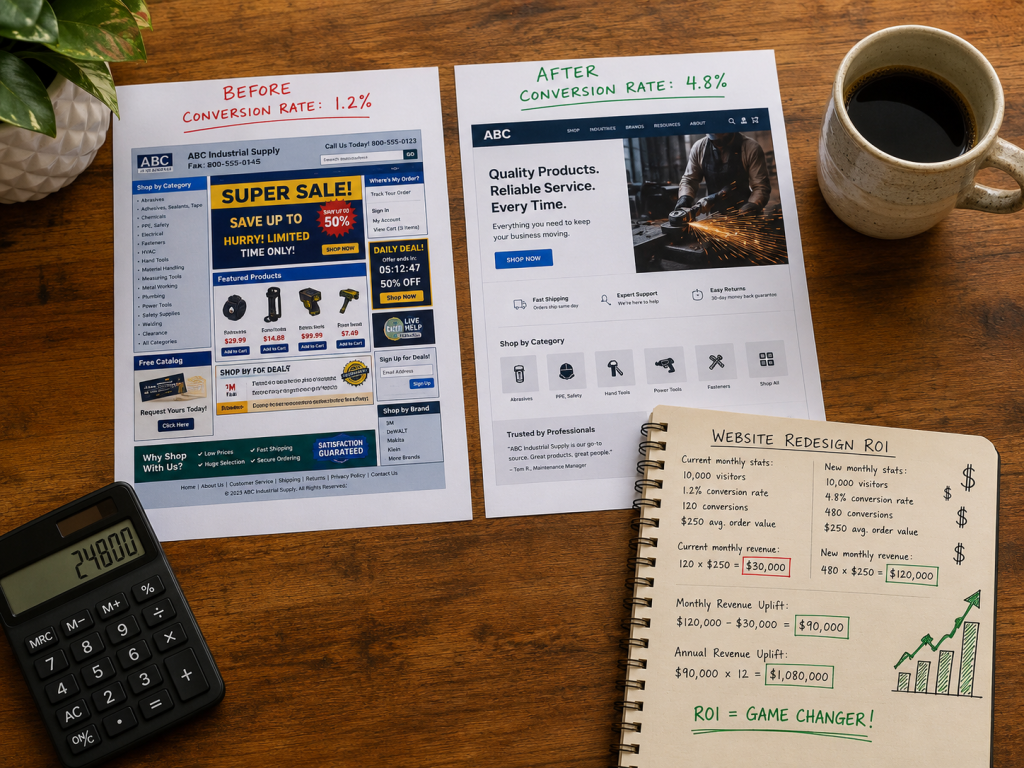
Knowing what changed requires knowing where you started. Capturing baseline numbers before launch prevents false conclusions and highlights true uplifts.
After launch, break traffic down by source organic search, paid ads, social referrals, and direct visits. Use Google Search Console for keyword impressions and click-through rates, and use tools like HubSpot to segment source quality, since organic visitors often convert at higher rates.
One advantage of measuring user experience improvements is the speed of feedback. It only takes about a week to see the effects of UX changes, while SEO changes can take up to a month.
Website launches should never be a one-and-done process. Continuous testing and optimization ultimately leads to a better customer experience, and ongoing iteration compounds your initial investment over time.
Key metrics to track include organic traffic by source, conversion rate per landing page, bounce rate by page type, form fills and phone call volume, and Core Web Vitals scores.
What Makes a Redesign Pay Off (vs. Fall Flat)
Not every redesign delivers ROI. The worst redesigns happen when businesses just want something prettier. The best redesigns happen when businesses want something that works better.
Every page should guide visitors toward one clear action. Your homepage needs an obvious value proposition, your service pages need compelling calls-to-action, and your contact forms need to be friction-free.
For B2B brands especially, the top ROI channel in 2024/2025 is website combined with blog and SEO efforts making a conversion-optimized, search-ready redesign a multiplier for everything else you do in marketing.
Additionally, 84.6% of designers say cluttered layouts are a major error small businesses make so simplifying your design is often more powerful than adding to it.
FAQ: Website Redesign ROI for Small Businesses
How long does it take to see ROI from a website redesign?
Many businesses see early signals within weeks. Some companies report increased visibility and leads within just 90 days of redesigning their website. SEO gains typically build over 3–6 months, while UX and conversion improvements can show up much faster.
What’s a realistic revenue increase to expect?
Results vary by industry and execution quality. Some businesses invest smartly and see their revenue jump 30–100% within the first year. The range is wide, which is why setting specific baseline metrics before launch is essential.
How do I know if my small business website actually needs a redesign?
Clear signs include: your site looks outdated compared to competitors, customers complain it’s hard to navigate, you can’t update it without outside help, leads from your website are declining or nonexistent, or you’re invisible in local Google searches. If several of these apply, you’re almost certainly losing revenue every day.
Is Website Redesign ROI Real for Small Businesses?
Absolutely but only when approached with intention. Website redesign ROI for small businesses is most powerful when the project is grounded in data, focused on user experience, and paired with strong SEO fundamentals. The website redesign benefits go far beyond aesthetics: lower bounce rates, stronger lead generation, better search visibility, and compounding conversion improvements are all on the table.
The businesses that see the biggest returns treat their website as a revenue asset not a brochure. If your current site is costing you leads, trust, and search rankings, the real question isn’t can you afford to redesign? Can you afford not to?
Ready to calculate your own website redesign ROI? Start with a free website audit and use the metrics above as your baseline. Every improvement you make from there is measurable and yours to keep.