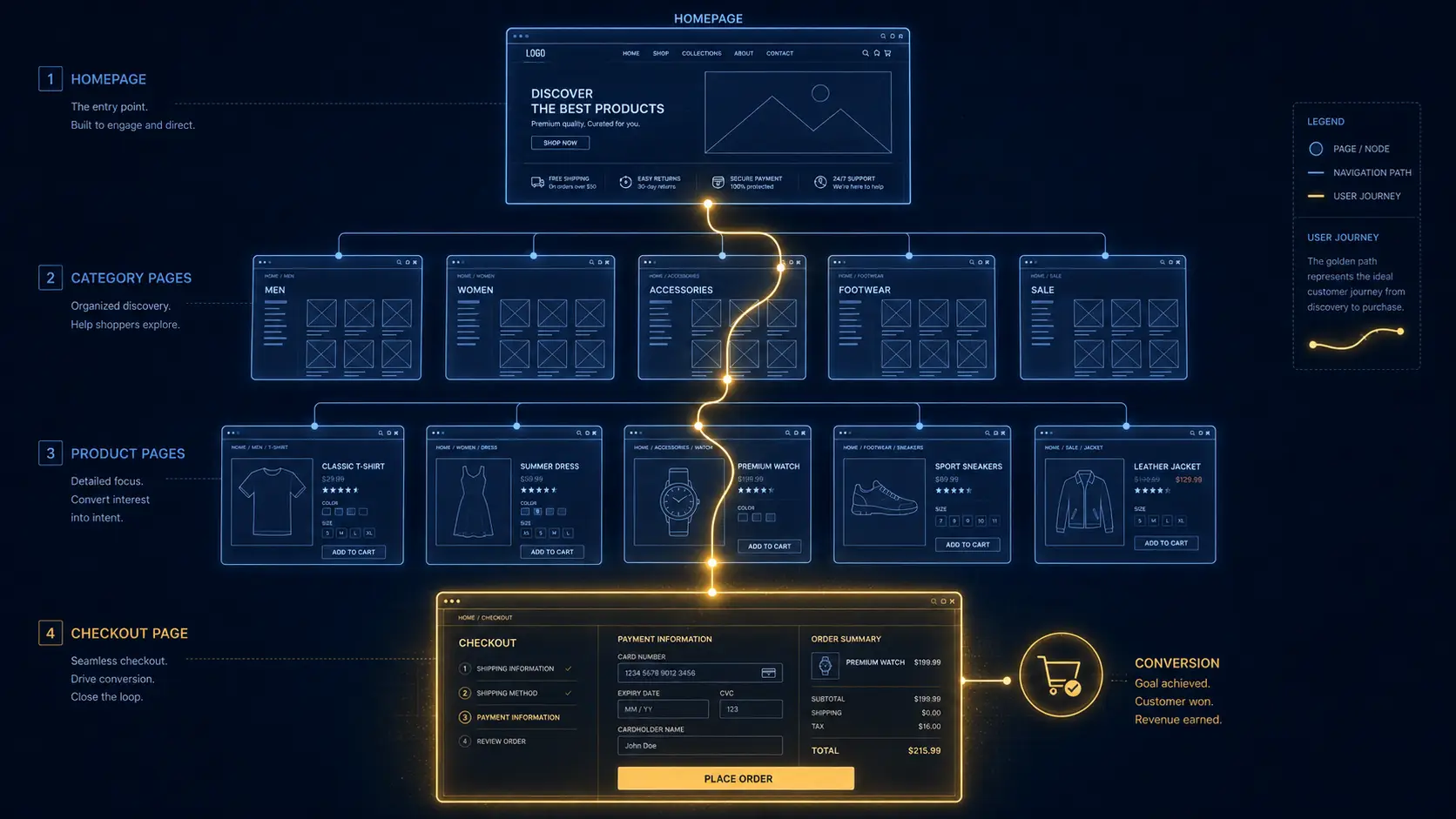
To hire a web designer for your service business, define your goals first, then vet candidates through portfolios and industry-relevant case studies. Ask the right questions about process, ownership, and post-launch support. Spot red flags early, nail down a solid contract, and prioritize the features that actually convert service clients.
Your website is the digital front door to your business. 75% of consumers judge a company’s credibility based on its website design. If you’re ready to hire a web designer for your service business, the stakes are real and the wrong choice costs more than money. It costs you clients. This guide walks you through every step, from scoping your project to signing the contract, so you make the right hire the first time.
Step 1: Define Your Goals Before You Search
Before you contact a single designer, get clear on what you need. Identify your website goals. Decide whether your website will be informational only, or if it will sell products and services, too.
For service businesses, your site typically needs to do a few things: build trust, generate leads, and make booking or contacting you effortless. Write these goals down. You need to establish a clear budget, set realistic timelines, and define the scope, which includes features and structure.
Also, budget realistically. A basic web design might start around $1,000, whereas more complex sites can go much higher. Include a buffer of 10–20% for unexpected expenses. Knowing your number before outreach keeps conversations focused and weeds out poor fits immediately.
Step 2: Know Where to Look
Online talent platforms like Upwork, Fiverr, Toptal, or 99Designs are great options to find freelance web designers. Beyond freelancer marketplaces, LinkedIn’s Services Marketplace lets you hire freelance professionals to help with projects for your business. Don’t overlook personal referrals from your business network; a vetted recommendation carries more weight than any star rating.
When you’re comparing freelancers versus agencies, consider the tradeoffs. Remote freelancers often have lower overhead costs, which can translate into more competitive pricing, and may offer greater flexibility in terms of working hours and project timelines. Agencies, however, typically bring a dedicated team, structured processes, and broader expertise under one roof.
Step 3: Evaluate Portfolios Like a Pro
Once you have candidates, dig into their work critically. Visit the websites they’ve created to assess their appearance and ease of use. A beautiful screenshot means nothing if the live site loads slowly or breaks on mobile.
A portfolio full of beautiful websites means nothing if none of them are in your industry or serve a similar audience. What works for a fashion e-commerce brand is fundamentally different from what works for a B2B software company or a healthcare provider.
Furthermore, go beyond the visuals. A website is not just about having an online presence with a site that looks good, it’s about getting a return on investment and having that website deliver business results. Ask for case studies that prove measurable outcomes, like leads generated or conversion rates improved.
Step 4: Questions to Ask a Web Design Agency
It’s important to ask the right questions during your selection process, because who you choose to work with will determine both the end product and how much you enjoy the process. Here are the most critical questions to ask any web design agency or freelancer before signing anything.
Process and Project Management
One of the most important questions to ask a website designer is what their site build process looks like. Ask them to explain it from start to finish. How do they gather details about your goals and challenges?
Also ask whether there will be a specific manager or contact person for your project, a timeline for the different stages, the manner in which you will receive progress reports, and whether a project management system is used.
SEO and Performance
There are technical best practices related to SEO and page speed that can make or break your firm’s ability to rank well. Ask for each agency’s specific approach to page speed optimization and SEO, and seek to understand how they’ll ensure your website has both the right content and the right technical optimizations.
Ownership and Post-Launch Support
The website, source code, design files, and all content should belong to you upon completion and final payment. Some agencies retain ownership or use proprietary systems that lock you into their services to avoid these arrangements. If you ever need to switch agencies or bring development in-house, you need full ownership of your assets.
Finally, ask about maintenance. Launching a website is just the beginning. It needs ongoing maintenance, security updates, performance monitoring, and continuous optimization based on user data. Ask what post-launch support packages the agency offers and what their response times are for critical issues.
Step 5: Web Designer Red Flags to Watch For
Not every agency is a good fit. Some are outright dangerous to work with. Knowing the web designer red flags saves you months of headaches.
They skip the discovery phase. Any reputable web design company will conduct research about your business and ask questions about your competitors. Research like this separates the good designers from the not-so-good no research plan on the part of your web designer is a major red flag.
They can’t provide references. References are one of the most valuable tools to determine whether you and a potential web designer are a good match. Consider it a red flag if a website team can’t provide you with the contact information for other happy customers.
They outsource without telling you. Some agencies offer web design and development services but outsource the work. This can sometimes lead to communication challenges, project delays, and additional costs.
They promise guaranteed results. Be wary of anyone who guarantees specific ranking positions or lead volumes. No designer controls search algorithms or buyer behavior promises like that are a warning sign, not a selling point.
Step 6: Your Web Design Contract Checklist
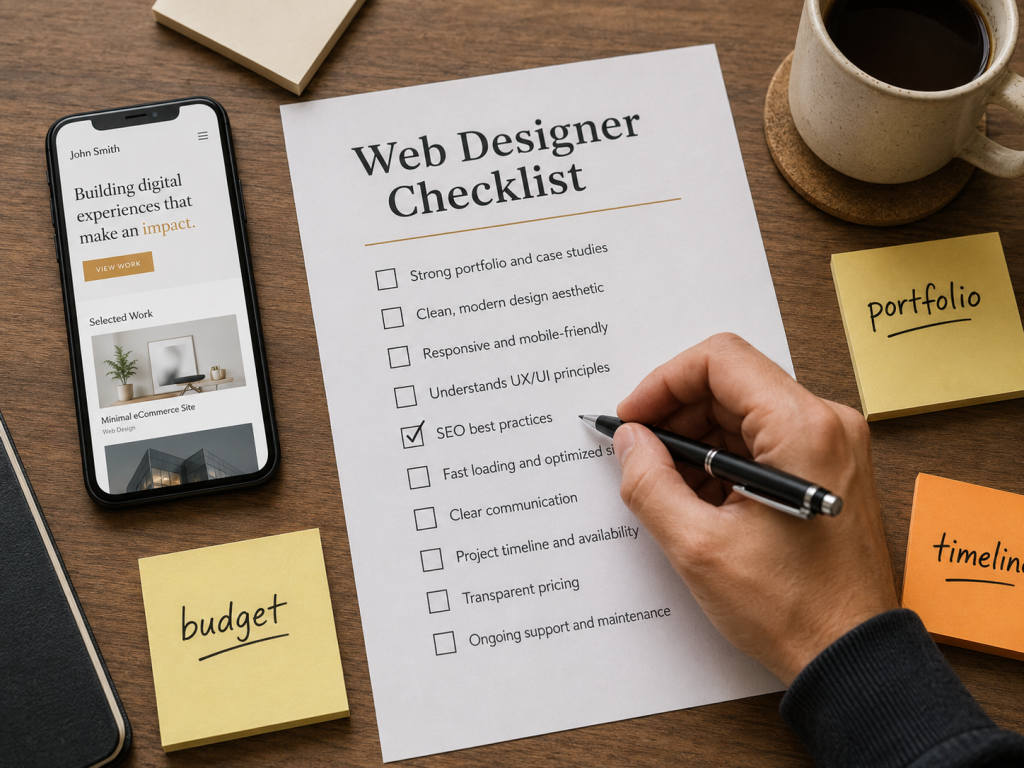
Never start without a signed agreement. A web design contract is a legally binding agreement between a client and designer. It contains pricing, scope of the design work, timeline of deliverables, payment schedule, intellectual property rights, and other legal terms.
Here’s what your web design contract checklist must include:
Scope of work. The scope of work section details the contractor’s services, delineates the project boundaries, and safeguards both the designer and the business. Specify whether SEO, hosting setup, and content creation are included or excluded.
Revision policy. Generally, initial project agreements call for either unlimited changes or a certain number of revisions. Get the exact number in writing before work begins.
Ownership transfer. Once the project is complete and fully paid for, the client receives rights to the final approved deliverables. Confirm this is explicitly stated.
Payment schedule. Specifying clear payment terms establishes a mutual understanding of financial obligations and expectations. A structured payment schedule protects cash flow for freelancers and provides predictable milestones for your team.
Termination clause. The contract should include terms for termination, outlining the conditions under which either party can end the contract and any associated penalties or obligations.
Step 7: Service Business Website Must-Haves
Finally, make sure your designer understands what a service business website actually needs, not just what looks good in a portfolio. The service business website must-haves are different from e-commerce or blog sites.
A good business website serves as an online home base, a welcome sign for new customers, a marketing tool to attract and retain customers, and a customer service hub to build ongoing customer relationships. For service businesses specifically, make sure the following are non-negotiable in your brief: a clear value proposition above the fold, prominent contact forms and click-to-call buttons, client testimonials and trust signals, a service-specific FAQ section, and fast mobile load times.
With a strong grasp of UX best practices, web designers can create a website that is easy to navigate and has information laid out in a clear manner. Web designers consider how customers use your site and create designs that guide visitors through the process of exploring your offerings toward higher conversion rates.
FAQ: Hiring a Web Designer for Your Service Business
Q: How much should I budget to hire a web designer for a service business?
It depends on scope and complexity. Consider design, development, domain purchase, hosting, and ongoing maintenance. A basic web design might start around $1,000, whereas more complex sites can go much higher. Agency-built custom sites typically run from $15,000 upward.
Q: Should I hire a freelancer or a web design agency?
Both can deliver excellent results. Costs for website design projects vary greatly, but hiring a freelancer, or even an in-house designer, is likely to be less expensive than hiring a full-service agency. Agencies tend to suit businesses with complex needs or ongoing marketing goals, while freelancers are a strong choice for focused, well-defined projects.
Q: How long does a service business website take to build?
The time to design and deploy a website varies based on project complexity. A simple landing page typically takes one to two weeks, while a multi-page business site requires three to six weeks. Custom builds can extend to two to three months. Factor in time for discovery, revisions, and feedback cycles when setting your project timeline.
Hire Smart, Then Hold the Standard
When you hire a web designer for your service business, you’re not just buying a website, you’re investing in your primary sales tool. Define your goals early, vet portfolios rigorously, ask the tough questions to any web design agency you consider, flag red flags before they become expensive mistakes, and protect yourself with a thorough web design contract checklist. Pair all of that with a clear brief covering your service business website must-haves, and you’ll be positioned to launch a site that genuinely works.
Ready to move forward? Start by listing your top three business goals for the site then let those goals drive every hiring decision you make.